Childhood
The Painted BirdThe book Childhood becomes a source of hope for the unnamed boy narrator at a time when his own childhood has been shaped by separation and loss. Read with help from Red Army mentor Gavrila, its story of a boy who endures family bereavement and grows into a celebrated writer offers the narrator a possible future beyond abandonment.
Introduction and Reading
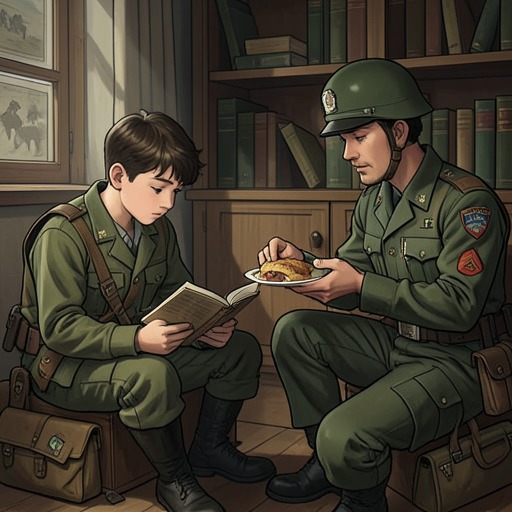
The narrator reads Childhood for the first time with assistance from Red Army mentor Gavrila. The book’s hero is a small boy, like the narrator, who loses his father on the opening page. The resemblance makes the story personally legible to a child whose parents sent him away during the first weeks of the Second World War, hoping to protect him while they went into hiding.
The Story and Its Effect
The hero’s hardships continue after his mother dies, leaving him alone; nevertheless, he grows up to become Maxim Gorky, whom Gavrila identifies as one of Russia’s greatest writers. The narrator reads the book several times, drawing hope not from an easy life for its protagonist but from the possibility that a child can survive difficulty and become someone of consequence. Gorky’s presence on many shelves in the regimental library and the wide recognition of his books place the hero’s eventual achievement within a larger world beyond the narrator’s immediate circumstances.
Significance to the Narrator
The book’s force depends on both likeness and distance. Its hero shares the narrator’s childhood vulnerability, yet his story continues beyond solitude toward adulthood and achievement. After the narrator’s foster mother dies within two months of his arrival in the village, he is left to wander between places of shelter and rejection. Against that history, rereading Childhood makes survival imaginable as more than merely enduring the next danger. The book does not promise that the narrator’s own path will follow Gorky’s; it gives him a story in which early loss does not determine the whole of a life.